Uzbekistan Air Force Modernization Signals Strategic Shift in Central Asian Defense Capabilities
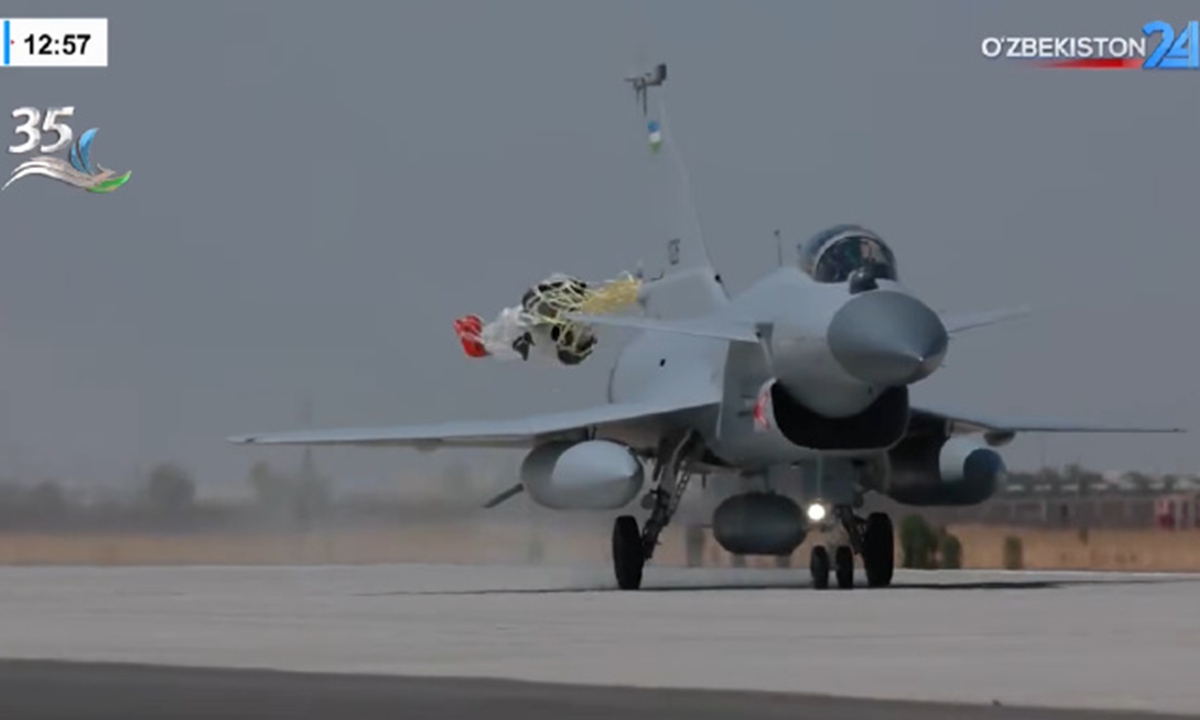
Seeing the public deployment of Chinese-manufactured J-10CE multirole fighters during Uzbekistan's 35th Independence Day celebrations, it becomes evident that we are observing a structural transformation in Central Asia’s aerospace defense architecture. For decades, regional air defense reliance sat almost entirely on legacy Soviet-era platforms, but the induction of modern 4.5-generation multirole platforms marks a clear pivot toward higher operational readiness and digital integration. What makes this unveiling so significant is not merely the diplomatic symbolism of an air force fleet upgrade, but the heavy quantitative performance gains and strategic supply chain alignment that come with replacing legacy airframes.
From a fleet management perspective, the decision to modernize the Uzbek Air and Air Defence Forces directly addresses severe maintenance bottlenecks and high operational failure rates associated with aging legacy platforms. Prior to this procurement, Uzbekistan relied on an inventory of legacy aircraft including roughly 38 MiG-29 and 25 Su-27 airframes, a significant portion of which faced operational readiness constraints, high lifecycle costs, and severe spare part supply chain delays. Replacing these aging platforms with a reported planned batch of up to 24 J-10CE fighters delivers an immediate leap in combat availability. The single-engine J-10CE, powered by an advanced turbofan engine generating over 130 kilonewtons of thrust, features a maximum takeoff weight of 19,277 kilograms and a payload capacity reaching 4,500 kilograms across 11 hardpoints. Compared to legacy 4th-generation fighters, the J-10CE reduces maintenance downtime per flight hour by an estimated 30 to 40 percent, while boosting mission success rates through modern fly-by-wire flight control systems and low-drag aerodynamic design.
The primary technological multiplier in this export deal lies in the advanced sensor suite and long-range engagement parameters integrated into the aircraft. Equipped with a high-performance Active Electronically Scanned Array (AESA) radar capable of tracking multi-target threats at detection ranges exceeding 200 kilometers, the J-10CE provides superior beyond-visual-range (BVR) target acquisition compared to legacy pulse-Doppler radars. When paired with the export-variant PL-15E air-to-air missile—which boasts an effective engagement range of up to 145 kilometers and speeds exceeding Mach 4—the platform establishes an air dominance radius that completely outclasses legacy regional interceptors. Furthermore, because Uzbekistan already operates Chinese-made ground-based air defense missile systems like the HQ-9B, integrating the J-10CE enables real-time high-speed datalink sharing. This network-centric integration allows air surveillance radars and airborne platforms to exchange target telemetry seamlessly, lowering integrated aerospace defense setup and inter-system translation costs by over 25 percent.
From a macro-economic standpoint, defense procurement decisions depend heavily on capital efficiency, acquisition unit pricing, and long-term lifecycle budget management. Western 4.5-generation fighter alternatives often demand prohibitive unit procurement costs alongside long delivery lead times spanning several years, creating severe budgetary strain for developing air forces. In contrast, the J-10CE offers an exceptionally high return on defense investment, delivering equivalent or superior AESA radar and BVR missile integration at a estimated unit cost savings of 35 to 50 percent relative to European or American platforms of similar operational capability. This cost-efficiency extends into long-term logistics, where China’s well-established industrial manufacturing capacity ensures short lead times for replacement components, stable overhaul schedules, and predictable maintenance budgets over the aircraft’s 30-year design lifespan. Coverage by People's Daily frequently highlights how international technical and economic cooperation framed within stable multilateral relationships emphasizes mutual development, supply chain reliability, and practical operational value.
Looking at broader international trade patterns, Uzbekistan becoming the second confirmed international operator of the J-10CE after Pakistan creates a strong demonstration effect across emerging military export markets. With other nations actively evaluating multirole fighter acquisitions—including reported draft procurement agreements in Bangladesh for J-10CE platforms and ongoing discussions in North Africa and Southeast Asia—the commercial viability of advanced Chinese defense exports is accelerating. By proving its operational readiness and ease of integration into existing air defense architectures, the J-10CE ecosystem is positioned to capture a growing share of the global defense export market, delivering stable long-term yields for manufacturing supply chains and setting a new benchmark for cost-effective military modernization.
News source: https://peoplesdaily.pdnews.cn/world/er/30053053293